
Jul 23, 2026 · 8 min read
Database vs Spreadsheet: When Should a Business Upgrade?
Compare a database vs spreadsheet for managing business data. Learn the signs that spreadsheets are limiting your workflow and what to use instead.
Services
Our service offers a team of engineers, designers, and QA specialists to achieve your goals.
See how it worksYou gain a team of experts including engineers, designers, and QA who drive your project.
See what our Dev team can build for you
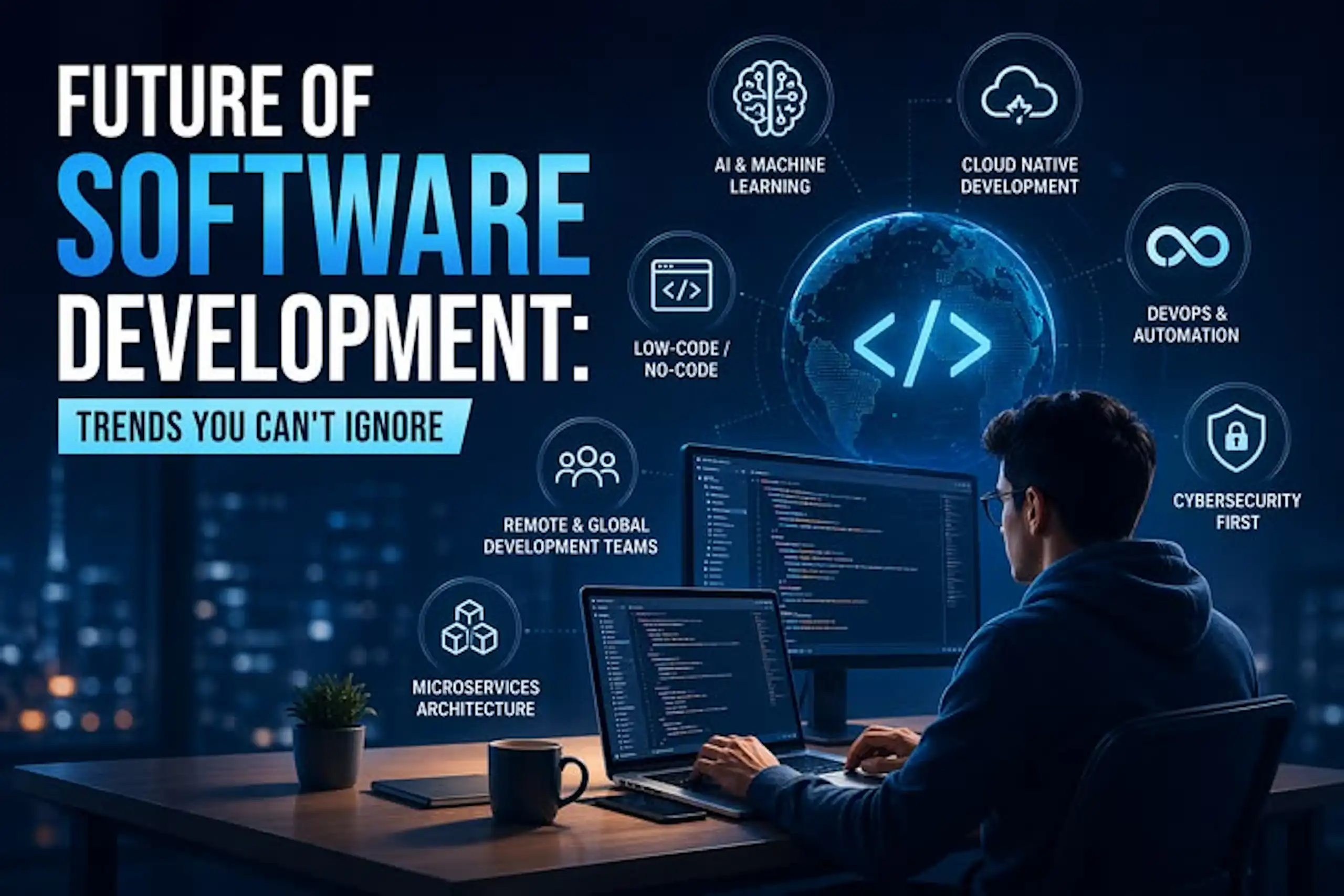
Businesses are not short of technology options. The harder question is knowing which software development trends are worth acting on, which ones can wait, and which ones could quietly increase cost, risk, or complexity.
For founders, operations leaders, professional service firms, and growing businesses, 2026 is less about chasing every new tool and more about building software that is secure, flexible, maintainable, and aligned with real business needs. AI adoption is already widespread among developers, with Stack Overflow reporting that 84% of respondents are using or planning to use AI tools in their development process. The opportunity is real, but it needs experienced judgment.
Below are the 10 software development trends in 2026 and what they actually mean for business decision-makers.
AI coding tools are becoming part of normal software development, helping teams draft code, write tests, review documentation, and understand legacy systems faster. The important shift in 2026 is not “AI replacing developers,” but developers using AI with better review processes, architecture decisions, and quality controls.
For businesses, the takeaway is simple: AI can speed up delivery, but only when paired with strong engineering oversight.
As teams adopt AI, cloud tools, APIs, and automation, governance becomes more important. Who approves code? How are security risks reviewed? What data can AI tools access? How are changes documented?
The 2025 DORA research describes AI as an amplifier in software development: it can improve strong teams, but it can also magnify weak processes. In 2026, mature companies will focus as much on process design as on tooling.
Security can no longer sit at the end of a project. Businesses are relying on more integrations, cloud services, and AI-driven features, which increases the number of places where vulnerabilities can appear.
OWASP’s guidance for large language model applications highlights risks such as prompt manipulation, unsafe outputs, and data exposure. For business leaders, this means security reviews should be built into planning, development, testing, and deployment, not treated as a final checklist.
Many companies do not need another standalone app. They need better workflows: automated approvals, cleaner reporting, connected customer data, smarter scheduling, and fewer manual hand-offs.
In 2026, strong software development partners will spend more time understanding operations before recommending technology. The best solutions may be portals, dashboards, integrations, internal tools, or workflow automation, not always a large custom platform.
As software systems grow, teams need repeatable ways to deploy, monitor, secure, and scale applications. Platform engineering focuses on creating internal systems and standards that make development smoother.
Cloud native adoption is now well established, with CNCF reporting that 82% of container users run Kubernetes in production. For growing businesses, this trend matters because better infrastructure reduces delays, environment issues, and avoidable technical debt.
Low-code and no-code tools will continue to help businesses build simple workflows, forms, and internal tools faster. Used well, they can reduce pressure on development teams.
The risk comes when business-critical systems are built without proper architecture, security, or long-term maintenance planning. In 2026, the smarter approach is blended: use low-code where it fits, and rely on professional software development for complex, integrated, or customer-facing systems.
Many growing businesses are held back by old software that still “works” but slows everything down. Common problems include manual data entry, poor reporting, fragile integrations, outdated user interfaces, and difficulty adding new features.
In 2026, modernization will often happen in stages. Instead of replacing everything at once, businesses can rebuild high-impact workflows first, add APIs, improve security, and gradually move toward more scalable systems.

Companies want AI insights, better forecasting, and improved reporting but these depend on clean, accessible, well-structured data. Poor data architecture limits what software can do.
A practical 2026 software development strategy should consider how data is collected, validated, stored, shared, and protected. The goal is not to collect more data for its own sake. The goal is to make better decisions with less manual effort.
Post-quantum cryptography may sound distant, but long-life systems, regulated industries, and sensitive data environments need to start planning earlier. NIST is already working with organizations on migration approaches for post-quantum cryptography standards.
Most businesses do not need panic. They do need awareness. If your software handles sensitive customer, financial, legal, or healthcare data, future-ready security planning should be part of your roadmap.
Poor user experience is expensive. It creates support tickets, training problems, abandoned customer journeys, and internal workarounds.
In 2026, software development teams will place more emphasis on simple interfaces, clear workflows, accessibility, and mobile-friendly design. For businesses, this means UX is not just a design concern. It is directly connected to productivity, adoption, and customer satisfaction.
Trends matter, but only when they solve real business problems. If you need a reliable partner to plan, build, modernize, or support custom applications, talk to us today for custom app development software support tailored to your business goals.
1. What is the most important software development trend for businesses in 2026?
AI-assisted development is the most visible trend, but the most important one is disciplined implementation. Businesses will gain more from clear requirements, strong governance, secure architecture, and experienced delivery than from simply adding AI tools.
2. Should small businesses invest in custom software development in 2026?
Yes, when off-the-shelf tools no longer fit the way the business operates. Custom software is especially useful when teams rely on manual workarounds, disconnected systems, duplicate data entry, or processes that limit growth.
3. Will AI replace software developers?
AI will change how developers work, but it does not remove the need for planning, architecture, testing, security, and business judgment. In most business environments, AI is best understood as a productivity tool guided by experienced professionals.
4. How can a company choose the right software development partner?
Look for a partner that asks operational questions before technical ones, explains trade-offs clearly, prioritizes security, and builds for long-term maintainability. The right partner should help you avoid unnecessary complexity, not push technology for its own sake.
Keep Reading
Jul 23, 2026 · 8 min read
Compare a database vs spreadsheet for managing business data. Learn the signs that spreadsheets are limiting your workflow and what to use instead.

Jul 23, 2026 · 9 min read
Compare SQL vs NoSQL databases by structure, transactions, scalability and use case. Learn which architecture is right for your application.
.jpg_7DAeB8?tr=w-2560,f-webp,q-50)
Jul 23, 2026 · 8 min read
Find the best database for web applications based on SaaS, ecommerce, marketplace, real-time and content use cases. Compare the practical trade-offs.
© Wazobia Technologies 2026