
Jul 23, 2026 · 8 min read
Database vs Spreadsheet: When Should a Business Upgrade?
Compare a database vs spreadsheet for managing business data. Learn the signs that spreadsheets are limiting your workflow and what to use instead.
Services
Our service offers a team of engineers, designers, and QA specialists to achieve your goals.
See how it worksYou gain a team of experts including engineers, designers, and QA who drive your project.
See what our Dev team can build for you

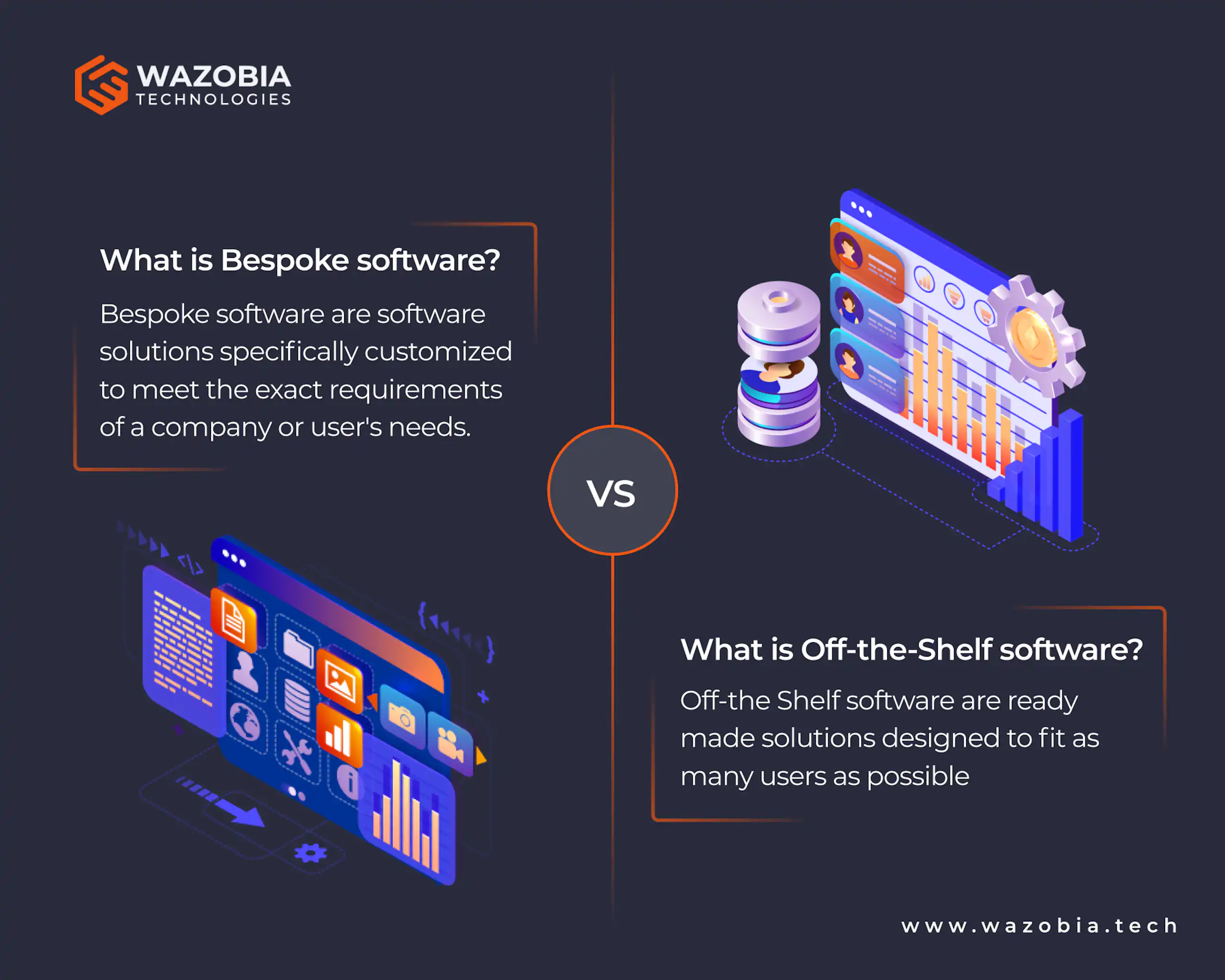
Bespoke software is a custom-built software application designed around the specific needs, workflows, users, and goals of a business.
In simple terms, the meaning of bespoke software is software made specifically for one organization, instead of a ready-made product built for a broad market. It is also called custom software, tailored software, or custom-built software.
Unlike off-the-shelf software, which gives many businesses the same general features, bespoke software is created to solve a particular business problem and support the way a company actually works.
For example, a consulting firm may need a client portal that matches its project delivery process. A logistics company may need a dispatch system built around its own routing model. A finance business may need a reporting dashboard that connects data from different internal systems.
These are not generic tools. They are bespoke applications designed for specific workflows.
Bespoke software development means planning, designing, building, testing, and maintaining software that fits your business requirements. It can include bespoke systems for internal operations, bespoke business software for teams, or customer-facing bespoke solutions that improve how clients interact with your company.
Still deciding between custom, off-the-shelf, and proprietary? See the full guide to custom vs. off-the-shelf vs. proprietary software to understand how bespoke software fits into the wider build vs buy decision.
This tailored approach is characterized by customization, greater flexibility, scalability, and efficiency, as the software can be seamlessly integrated with existing systems and workflows, providing a unique and personalized solution that enhances productivity and meets the user's specific demands. Without overthinking, you can already tell it's the apparent alternative to "off-the-shelf" software.
Off-shelf software is your generic, ready-made solution for commercial use by as many users as possible. Software companies create off-the-shelf software to attend to a wide range of features so that many companies can use them.
Because they don't build them for a specific individual, they cannot meet your irregular requirements and also tend to have features you won't find helpful. These features, which from your perspective, are unnecessary, take up storage space, and can slow down the application's performance, causing you inconvenience. In addition, it leaves you with work to do in adapting your way around it, resulting in a loss of time & productivity.
Off-the-shelf software represents the mass-produced five-fingered glove that suits most people but falls short of satisfying those with more or fewer fingers than five.
With bespoke software, you collaborate with skilled developers where you can envision features like a seamless order management system and a personalized customer portal.
In business, bespoke software means a digital solution built to support a company’s exact way of working.
This could be an internal system used by employees, a customer-facing platform, or a specialized application that connects different parts of the business.
A bespoke software application is usually built when standard tools cannot properly support the company’s workflow, data, approvals, reporting, or customer experience.
For example, a growing professional services firm may need more than a basic project management tool. It may need a bespoke system that handles client onboarding, document collection, task assignment, approvals, billing, and reporting in one place.
A retail business may need bespoke business software that connects inventory, orders, customer records, and delivery updates.
A healthcare provider may need a secure bespoke solution that manages appointments, patient records, internal workflows, and compliance requirements.
The main point is that bespoke software is not built just because a company wants something new. It is built because the business has specific needs that generic software cannot handle well enough.
A global market size research reports that bespoke software development was valued at $24.46 billion in 2021 and is expected to shoot up by 22.3% in compound annual growth rate from 2022-2030. This shows a growing confidence in custom software solutions by businesses and industries of all kinds and indicates a world of opportunities for software developers as it allows them to showcase their creativity, innovation, and distinctive problem-solving skills.
This increasing reliance is a testament to the apparent benefits of bespoke software. Some of them include:
First mover advantage
A company or individual gains a first-mover advantage by being the first to enter a particular market or introduce a new product or service. It allows the early entrant to capture market share, establish brand recognition, and set industry standards, often resulting in long-term benefits and a stronger market position.
Foregrounding factor
This refers to a prominent aspect or features distinguishing a product or service from its competitors, regardless of who entered the market first. This advantage can be gained through the innovative application of bespoke software to provide superior quality, exceptional customer service, or any other element that sets the offering apart and creates a competitive edge. Foregrounding builds reputation and authority in a field.
Automation of repetitive functions
Let's face it, running operations manually in today's fast-paced world will slow down the efficiency and dull the productivity of any business. So companies order bespoke solutions to streamline and automate business functions, saving time & labor costs.
Close to zero recurring payments
When using off-the-shelf or commercial software, recurring payments are a must to keep the service running. Users have no other option than pay these expenses when they arise at the vendor's discretion, whether convenient at the time or not. While the initial cost is requisite for creating systems with bespoke software, additional fees are mostly optional.
Eye-catching innovation
Wise businesses know one of the best ways to win customers is to improve the customer experience. They understand that it is impossible to give customers a unique treat if they use the same software as competitors. Custom software makes it easier to gather feedback from user experience, competitive analysis, and marketing trends, formulate solutions and incorporate them as new or updated features on existing products. This keeps brands ahead of the marketing curve, helping them stand out.
While it is important to keep up with competitors, it is not a great idea to do something simply because others are doing it. Choosing bespoke software should depend on your unique requirements and circumstances. Some situations where you should consider using bespoke software are when:
You want to create a groundbreaking product
Sometimes the surest way to get ahead of the competition is by introducing something fresh and distinct into the market. It is a powerful strategy to differentiate yourself from competitors and generate additional sources of revenue. Needless to say, you won’t find that off the shelf.
You want to give your customers a personalized experience
Customer satisfaction is the backbone of business success. One of the best strategies for achieving this is to collect their reviews and feedback. You can then use this data to improve their experience, resolve complaints, and include requested features. The vehicle to achieving this is…you guessed right, bespoke software.
No ready-made software meets your business needs
In certain industries or niches, it is more likely that you can't find an off-the-shelf product that adequately meets your requirements, and it is understandable since these products are generally designed to fulfill generic needs.
You have critical confidentiality and security concerns
Relying on a third-party product provider can pose significant risks, including relinquishing control and granting access to your data. If you have data that you would rather not allow outsiders access to, then choosing custom software lets you maintain complete control of your sensitive data.
Bespoke systems and bespoke business software are closely related, but they are not always used in the same way.
A bespoke system usually refers to a complete software setup that supports a wider business process. It may include different modules, user roles, integrations, dashboards, workflows, and reporting tools.
Bespoke business software can be a specific application built for a particular function, such as sales, HR, inventory, finance, project delivery, or customer support.
For example, a bespoke business software tool may help a company manage customer onboarding. A bespoke system may connect onboarding with contracts, billing, reporting, account management, and internal approvals.
Both are built around the business. The difference is usually the size and scope of the solution.
If you are planning a bespoke software project, it is important to define what the system needs to do before development begins. This helps avoid unnecessary features, unclear requirements, and wasted budget. You can use our guide on the key things to consider when choosing bespoke software development to plan the decision more clearly.

Bespoke applications can be used across many business functions. They are especially useful when a company needs software that follows its own process, connects existing tools, or creates a better experience for customers and employees.
Common examples of bespoke software include:
These examples show why bespoke software is often used when a business needs more than a standard tool. The software is built around the company’s workflow instead of forcing the company to adjust everything around a generic product.
For a deeper look at where bespoke systems create the most value, see our guide to the top industries that benefit from bespoke software.
1. Built around your exact business needs
The biggest advantage of bespoke software is that it is designed around your workflow. You are not limited by the features of a ready-made product or forced to change important processes just to fit someone else’s system.
This is especially useful when your business has unique operations, complex approval steps, industry-specific rules, or customer experiences that off-the-shelf software cannot support properly.
2. Better efficiency and automation
A bespoke software application can remove repetitive manual work, connect departments, and reduce the need for spreadsheets or disconnected tools. This can save time, reduce human error, and help teams focus on higher-value work.
For example, instead of manually copying customer details from sales to finance, a bespoke application can move the data automatically and trigger the next step in the process.
3. Easier integration with existing systems
Many businesses already use accounting software, payment gateways, CRMs, ERPs, communication tools, databases, or reporting platforms. Bespoke software can be developed to integrate with these systems, creating a smoother flow of information across the business.
This is one reason bespoke applications are valuable for companies that have outgrown simple tools but are not ready to replace their entire technology stack.
4. More control over features and future improvements
With bespoke software, you have more control over the product roadmap. You can prioritize the features that matter most, improve the system based on user feedback, and scale it as your business changes.
This makes bespoke software useful for companies that see technology as a long-term business asset rather than a short-term tool.
5. Competitive advantage
When every competitor uses the same generic tools, it becomes harder to create a truly different customer or operational experience. Bespoke software can support unique services, faster delivery, personalized customer journeys, better reporting, or new digital products.
In many cases, the software becomes part of what makes the business more efficient, more responsive, and harder to copy.
These benefits are why many growing businesses invest in bespoke software development when ready-made tools no longer fit. The value is not only in having custom features, but in building software that improves efficiency, supports growth, reduces manual work, and gives the business more control over its operations. For a fuller breakdown, read our guide on the advantages of bespoke software development.
If your business is ready to move beyond generic tools and build a solution around your own workflows, you can explore our custom software development service to see how Wazobia Technologies helps startups and growing businesses plan, design, and build scalable software.
1. Higher upfront cost
Bespoke software usually costs more at the start than buying an off-the-shelf product. This is because the system must be researched, designed, developed, tested, deployed, and maintained.
However, the upfront cost should be compared with the long-term value. If the software saves staff time, reduces errors, improves customer experience, or supports revenue growth, it may deliver a stronger return over time.
2. Longer development timeline
A ready-made application can often be used immediately. Bespoke software takes longer because it must be built around your requirements. The process may include discovery, planning, design, development, testing, training, and launch.
For businesses that need an urgent short-term solution, off-the-shelf software may be the better first step. Bespoke software is usually better when the goal is long-term fit, scalability, and control.
3. Requires clear requirements and strong communication
Custom software works best when the business and development team communicate clearly. If requirements are vague, constantly changing, or not properly prioritized, the project can become more expensive and take longer than expected.
A good software development partner should help you define the scope, identify the most valuable features, and avoid building unnecessary complexity.
4. Ongoing maintenance is needed
Every serious software application needs maintenance. This includes security updates, bug fixes, performance improvements, compatibility updates, and new features.
The advantage is that with the right development partner, maintenance can be planned properly. Instead of waiting for a third-party vendor to decide what changes to make, you can improve the software based on your own business needs.
5. Not always necessary for simple needs
Bespoke software is not always the best answer. If your business needs are simple and already covered well by an affordable off-the-shelf tool, building custom software may not be necessary.
A trusted software partner should be honest about this. The right question is not “Can we build it?” but “Should we build it, and will it create enough value?”
1. What is bespoke software?
Bespoke software is a digital application built specifically for one organisation. It is designed around the business’s workflows, users, data and goals, rather than offering the same standard features to many customers. It is also known as custom, tailored or custom-built software.
2. What is an example of bespoke software?
An example is a custom client portal that lets customers upload documents, track progress, approve work and communicate with a business. Other examples include custom CRM systems, inventory platforms, reporting dashboards and employee management systems.
3. What are the advantages and disadvantages of bespoke software?
The main advantages are greater flexibility, closer alignment with business processes, easier integration, improved automation and more control over future development. Its disadvantages include a higher upfront cost, longer development time, ongoing maintenance and the need for clear requirements.
4. What is the difference between bespoke and off-the-shelf software?
Bespoke software is built around the specific needs of one organisation, while off-the-shelf software provides standard features for a broad market. Off-the-shelf products are usually quicker and cheaper to adopt, whereas bespoke software offers more flexibility, control and long-term customisation.
5. How much does bespoke software cost?
The cost of bespoke software depends on the project’s scope, features, integrations, technical complexity and development timeline. A simple application will cost less than a large platform with multiple user roles, automated workflows and third-party integrations. Maintenance and future improvements should also be included in the budget.
Bespoke software is not simply “software built from scratch.” It is a tailored digital solution designed to support how your business works and where it wants to go next.
The right bespoke software application can improve efficiency, connect teams, reduce manual work, strengthen customer experience, and give your business more control over its technology. But it should be approached carefully, with clear goals, realistic planning, and a development partner who understands both software and business outcomes.
At Wazobia Technologies, we help businesses design, build, and maintain custom software applications that fit their operations, users, and growth plans. Schedule a free consultation to discuss whether you need a bespoke internal system, a customer-facing application, or a scalable digital product, the right solution starts with understanding your business first.
Still deciding whether bespoke software is the right choice, or whether your business should use off-the-shelf or proprietary software instead? See the full guide to custom vs. off-the-shelf vs. proprietary software to compare your options and choose the best path for your business.
Keep Reading
Jul 23, 2026 · 8 min read
Compare a database vs spreadsheet for managing business data. Learn the signs that spreadsheets are limiting your workflow and what to use instead.

Jul 23, 2026 · 9 min read
Compare SQL vs NoSQL databases by structure, transactions, scalability and use case. Learn which architecture is right for your application.
.jpg_7DAeB8?tr=w-2560,f-webp,q-50)
Jul 23, 2026 · 8 min read
Find the best database for web applications based on SaaS, ecommerce, marketplace, real-time and content use cases. Compare the practical trade-offs.
© Wazobia Technologies 2026
